


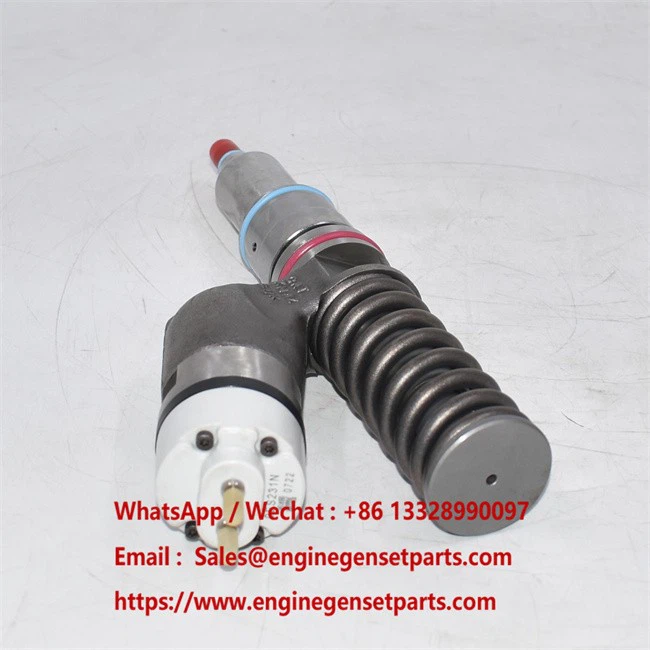
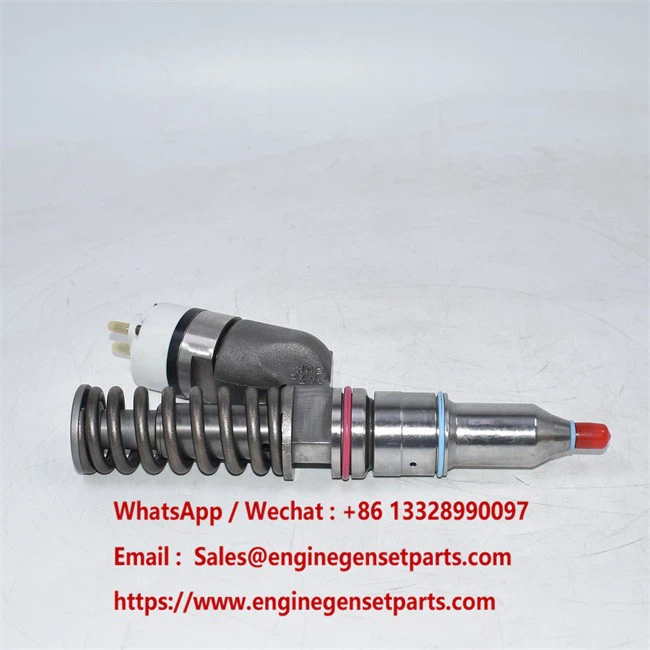

China Everlasting Parts Co., Ltd. is one of the most professional manufacturers and suppliers of 235-1401 fuel injector in China. Welcome to wholesale original and genuine 235-1401 fuel injector from our factory. Contact us for cheap products and OEM service.
The impact of fuel injector carbon deposition on engine performance mainly lies in two aspects: on the one hand, the change in the flow characteristics of the fuel injector leads to the inability to accurately control the injection amount or the carbon deposition affects the injection time; on the other hand, the change in spray shape It may cause more wall collisions and affect the mixture of oil and gas in the combustion chamber, thereby affecting normal combustion in the cylinder, reducing thermal efficiency and increasing emissions; in addition, the change in spray shape may cause a liquid oil film or an overly lean mixture to form near the spark plug, causing engine diffusion. Combustion or ignition failure. The impact of carbon deposition on engine performance is extremely obvious, and it is reflected in the automotive after-sales market. Therefore, major automobile manufacturers pay more attention to this issue and do more research in this area.
In order to understand the impact of carbon deposits inside the injector on the performance of the injector, the author found two injectors of the in-cylinder direct injection engine that had undergone bench tests of 58,000 kilometers and 200,000 kilometers, and took the same model at the same time. Two new injectors. Two of the new injectors are numbered N1 and N2; two are numbered U1 and U2 after 58,000 kilometers of bench testing; the other two are numbered U1 and U2 after 200,000 kilometers of bench testing. U3, U4.
The selected used injectors represent the carbon deposition of injectors after use in general vehicles to a certain extent. However, due to differences in engine operating conditions, differences in driving habits and the randomness of carbon deposition, the same driving mileage The carbon deposits of different engine injectors and even the carbon deposits of different cylinder injectors of the same engine may be different.
The working fluid used in the fuel injection quantity test is n-heptane because its physical properties are similar to gasoline. The reason for not using gasoline is that the gasoline used in the before and after experiments may have slight differences in the properties of the gasoline due to different batches, which will affect the experimental results. In the fuel injector injection quantity test experiment, the injection pressure is set at 8, 9, and 10MPa, the injection pulse width is 1ms, and the ambient pressure is 1 atmosphere. The figure below shows the experimental results of fuel injection quantity measurement.

It can be clearly seen from the figure that the fuel injection volume of all injectors increases with the increase of injection pressure. However, at any injection pressure, the injectors that have been used and are covered with carbon deposits The single injection volume is significantly less than that of a new, unused injector. This shows that the existence of carbon deposits has obvious obstacles to the flow capacity of the fuel injector. From the test results, the flow rates of U1 and U2 injectors are at the same level, and the flow rates of U3 and U4 injectors are at the same level. Compared with the flow rates of N1 and N2 injectors, the flow rates are significantly lower. Moreover, the flow rate of U3 and U4 injectors is also significantly lower than that of U1 and U2 injectors. This shows that the injector used in the test after 58,000 kilometers of bench testing has a significant reduction in flow rate due to the generation and accumulation of carbon deposits in the injector. However, after continuing the bench test to 200,000 kilometers, the flow rate of the injector is significantly reduced. During the process, carbon deposits still accumulate in the fuel injector, causing the flow capacity of the fuel injector to continue to decrease. There is a difference between the fuel injection volume measurement data of N1 and N2 injectors. The experimental results differ by 2.19% at 9MPa. This is the flow difference caused by the manufacturing error of the injector. It is within the factory calibration flow error range of the injector. within, does not affect the comparison between the two injectors. The single injection volume of the two new injectors (N1, N2) is averaged, and compared with the two injectors (U1, U2) that have been tested on the bench for 58,000 kilometers and the bench test for 200,000 kilometers. The average value of the single injection volume of the experimental injectors (U3, U4) is compared. Under the same injection pressure, the fuel injection volume of the injector with carbon deposits that has been used for 58,000 kilometers is compared with the new injection volume. The fuel injector has a great decline, the decline rate is about 10%; while the flow rate of the injector that has been used for 200,000 kilometers has dropped by about 15%. (When carbon deposition causes the injector flow coefficient to decrease, modern engine electronic control technology can increase the injection pulse width in real time through closed-loop control to compensate for the impact of the decrease in flow coefficient. On the surface, carbon deposition seems to have no impact on engine power. . However, carbon deposition in the nozzle hole will cause changes in the flow cross-sectional area of the nozzle hole, resulting in changes in the spray penetration distance and spray angle, resulting in changes in the concentration distribution of the mixture in the cylinder, ultimately resulting in an increase in fuel consumption and harmful emissions)
Hot Tags: 235-1401 fuel injector manufacturers, wholesale, aftermarket, genuine, original, cheap, OEM, replacement, 32F61 00062 317 2300, 10R-7675, Fuel Injector, Fuel Nozzle Valve, Perkins Engine Nozzle, 326-4700


